PURR: The Institutional Bid on Hyperliquid Explained

What Bob Diamond's Nasdaq-listed treasury vehicle signals about HYPE's regulatory and institutional future
Pierce & Pierce Brief | December 6, 2025
This piece accompanies our Hyperliquid deep dive published December 6, 2025.
On Tuesday, a former Barclays CEO began accumulating HYPE via a Nasdaq-listed company he chairs.
Three days later, Hyperliquid Strategies Inc (NASDAQ: PURR) trades at $3.65 with a ~$570M market cap—against roughly $690M in underlying assets. The vehicle holds 12.6 million HYPE tokens and $300 million in cash, with a stated objective to raise $1 billion specifically to accumulate more.
This is not a crypto fund. This is not a SPAC hoping to find a target. This is a purpose-built, SEC-registered, Nasdaq-listed treasury company whose sole strategic objective is HYPE accumulation.
Structurally, PURR behaves more like MicroStrategy than a closed-end fund: it's an operating company that can raise equity or debt and redeploy into a single asset, rather than a regulated fund product with diversification and mandate constraints. That flexibility is the point.
The question isn't whether Wall Street wants exposure to Hyperliquid.
The question is what their legal teams concluded about regulatory risk that gave them the confidence to file.
| If you are... | PURR primarily means... | Signal |
|---|---|---|
| HYPE holder | Extra potential bid + increased scrutiny via SEC filings | 🟢 |
| Crypto-native non-holder | New way to front-run or fade the institutional bid | 🟡 |
| Equity-only investor | Access to HYPE economics without touching tokens directly | 🟢 |
The Vehicle
| Element | Detail | Signal |
|---|---|---|
| Ticker | PURR (Nasdaq Capital Market) | 🟢 |
| Trading Since | December 3, 2025 | 🟢 |
| Structure | Digital asset treasury company | 🟢 |
| HYPE Holdings | 12.6M tokens (~$390M at $31) | 🟢 |
| Cash Holdings | ~$300M | 🟢 |
| Total Assets | ~$690M | 🟢 |
| Market Cap | ~$570M | 🟡 |
| NAV Discount | ~17% | 🟡 |
| Target Raise | $1B via equity issuance | 🟡 |
PURR emerged from a reverse merger with Sonnet BioTherapeutics, a shell biotech. The structure mirrors MicroStrategy's Bitcoin playbook: use a public listing to raise capital, deploy that capital into a single digital asset, stake for yield, repeat.
The mechanics matter, but the signal matters more.
The People
| Name | Role | Background |
|---|---|---|
| Bob Diamond | Chairman | Former Barclays CEO (2011-2012), Atlas Merchant Capital CEO |
| David Schamis | CEO | Atlas Merchant Capital CIO, J.C. Flowers alum (2000-2014), Yale Economics |
| Larry Leibowitz | Board | Former NYSE COO, Atlas Operating Partner |
| Eric Rosengren | Board | Former President, Federal Reserve Bank of Boston |
| Jeff Tuder | Board | Financial services veteran |
Read that board composition again.
Bob Diamond ran Barclays through the financial crisis. Eric Rosengren ran the Boston Fed. Larry Leibowitz was COO of the New York Stock Exchange. David Schamis spent 14 years at J.C. Flowers doing financial services private equity before co-founding Atlas Merchant Capital.
These are not crypto tourists. These are not retail speculators. These are not even typical venture capitalists looking for token allocations.
These are TradFi operators who have spent decades navigating regulatory complexity in financial services.
Credentials don't guarantee outcomes—TradFi veterans have backed failures before. What this board composition signals is staying power and access, not infallibility.
Why December 2025? The timing matters: post-election regulatory tailwind, Bitcoin ETF approval precedent established, and HYPE trading near cycle highs created a favorable window. They didn't file this in a bear market.
The Due Diligence Signal
Here's what had to happen for PURR to exist:
- SEC Review: An S-1 registration statement was filed, reviewed, and declared effective. This means the SEC deemed disclosures sufficient—not that the business model is blessed. Coinbase's S-1 went effective in 2021; the SEC sued them two years later anyway. An effective S-1 signals disclosure sufficiency, not regulatory immunity.
- Legal Sign-Off: Greenberg Traurig (HSI counsel) and Lowenstein Sandler (Sonnet counsel) signed off on the transaction. Lucid Capital Markets provided a fairness opinion. These are not firms that rubber-stamp novel structures.
- Nasdaq Approval: The exchange accepted the listing under the PURR ticker. Nasdaq compliance reviewed the business model.
- Institutional LP Buy-In: Atlas Merchant Capital and Paradigm committed capital. Their LPs—pension funds, endowments, family offices—approved exposure to a HYPE-focused vehicle.
None of this happens casually.
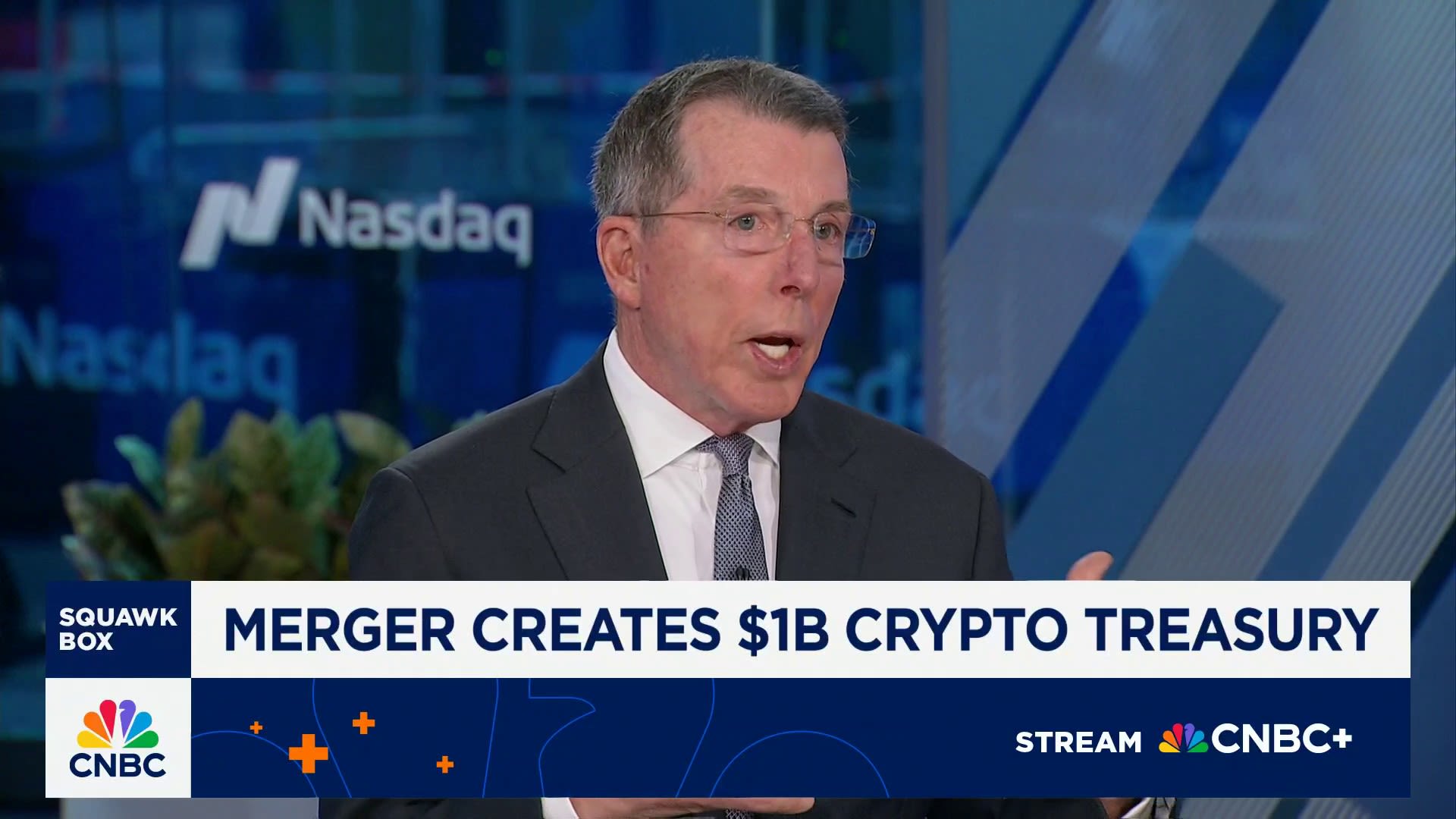
When Bob Diamond appears on CNBC to discuss Hyperliquid Strategies, he's not speculating. He's representing the output of a multi-month due diligence process conducted by lawyers, accountants, and compliance teams whose reputations depend on getting regulatory risk assessment right.
The implicit signal: The people who navigate regulatory complexity for a living believe HYPE can be accumulated through a public vehicle with manageable regulatory risk—risk they're willing to disclose and defend, not risk that doesn't exist.
That's not a guarantee. It's not a blessing. It's a data point.

The NAV Question
PURR currently trades at roughly a 17% discount to its net asset value.
| Component | Value | Signal |
|---|---|---|
| HYPE (12.6M @ $31) | ~$390M | 🟢 |
| Cash | ~$300M | 🟢 |
| Total NAV | ~$690M | 🟢 |
| Market Cap | ~$570M | 🟡 |
| Discount | ~17% | 🟡 |
Why the discount?
Access wrapper dynamics: PURR gives US equity investors an easier path to HYPE exposure than holding tokens directly, but that benefit is offset by vehicle friction (fees, governance, dilution), which typically shows up as a discount or premium to NAV depending on sentiment.
Management costs: Director compensation, operational overhead, and future equity dilution from the $1B raise.
Execution risk: The $1B target isn't deployed. If capital raising stalls, the accumulation thesis weakens.
Early days: Three trading days isn't enough to establish fair value.
Whether that 17% discount closes or persists will depend on US investor demand for equity-wrapped crypto exposure—and on how the market prices the complexity of the wrapper itself. GBTC traded at both steep premiums and deep discounts to NAV over the last cycle; PURR's discount likely reflects a "complexity tax" (fees, governance, dilution risk) as much as skepticism about HYPE.
Risks specific to PURR:
- Governance risk: Board could change strategy or sell HYPE holdings
- Financing risk: Future equity issuance may dilute at discount to NAV
- Tracking risk: Discount/premium to NAV may diverge significantly from HYPE price action
Yield mechanics: PURR does not pay dividends. Staking yield accrues to NAV, similar to a compounding ETF. Shareholders benefit through appreciation rather than income—a structure that partially explains why a discount exists.
What This Changes for HYPE
The PURR vehicle creates structured institutional demand that didn't previously exist.
If they deploy the full $1B target:
| Metric | Calculation |
|---|---|
| Additional HYPE accumulated | ~32M tokens ($1B ÷ $31) |
| % of current circulating supply | ~12% (at current prices) |
| Strategy | Stake, don't sell |
At current run-rate, PURR's full $1B target is roughly 8-9 months of Assistance Fund buybacks compressed into a single discretionary vehicle.
Understanding the demand stack:
Think of PURR as a discretionary, board-governed buyer whose firepower depends on capital markets conditions. Think of the Assistance Fund as a mechanical, revenue-linked buyer that operates automatically via protocol fees.
When both are active, they stack. When conditions tighten, the Assistance Fund persists; PURR may not.
PURR is additive to existing demand, not a replacement for it.
Bull case reinforcement: Institutional accumulation + protocol buybacks creates sustained demand against a supply schedule where 77% of November unlocks were held or restaked.
Bear case unchanged: PURR doesn't resolve centralization risk, regulatory uncertainty, or insurance fund adequacy. If the SEC decides HYPE is a security, a Nasdaq-listed accumulation vehicle won't provide protection—it will be Exhibit A.
The invalidation triggers from our main report remain intact:
- Market share below 50% for 3 months
- Monthly revenue below $40M for 2 consecutive months
- HLP balance below $200M
- Team selling exceeds 50% of unlocks for 3 consecutive months
- SEC/CFTC enforcement action
PURR is a catalyst, not a thesis change.
Everything in our main HYPE report about centralization, JELLY precedent, and unlock math still stands. PURR just changes who's on the other side of the order book if the thesis works.
If any of our HYPE invalidation triggers fire—market share below 50%, revenue below $40M/month, HLP below $200M, SEC action—PURR doesn't save the thesis. It just gives another exit route.
If You Already Hold HYPE
What PURR adds:
- Potential persistent institutional bid (subject to capital deployment)
- Reputational halo from TradFi involvement
- Additional scrutiny and transparency via SEC filings
What PURR does not change:
- Validator centralization (~80% foundation stake)
- JELLY precedent for governance override
- Team unlock schedule (24 months remaining)
- US regulatory overhang on the underlying asset
What to watch:
- Pace of capital deployment vs stated $1B target
- Any SEC comments or 8-K disclosures on holdings/strategy
- Discount/premium behavior vs NAV over time
- Whether other institutional vehicles follow
The Bottom Line
| Question | Answer | Signal |
|---|---|---|
| Does PURR validate institutional interest? | Yes. Unambiguously. | 🟢 |
| Does PURR resolve regulatory risk? | No. It signals confidence, not certainty. | 🟡 |
| Does PURR change HYPE fundamentals? | No. Revenue, share, and buybacks still drive value. | 🟡 |
| Does PURR create additional demand? | Yes. Potentially 12% of circulating supply if fully deployed. | 🟢 |
| Does PURR reduce odds of a "rug" moment? | Indirectly at best. Increases scrutiny but doesn't change validator control. | 🟡 |
| Should you buy PURR instead of HYPE? | Depends on access, tax situation, and NAV discount view. | 🟡 |
Closing
The institutional chapter of the Hyperliquid story is being written in real-time.
Three days ago, HYPE existed only on-chain and on offshore exchanges. Today, US equity investors can gain exposure through a Nasdaq-listed vehicle chaired by a former Barclays CEO and advised by a former Fed president.
That transition—from DeFi-native to TradFi-accessible—is the story PURR tells.
The question for HYPE holders isn't whether this is good news. It is.
The question is whether the $1B gets deployed, whether the regulatory confidence proves justified, and whether the rest of Wall Street follows Atlas and Paradigm through the door they just opened.
We'll be watching.
Sources
| Category | Source |
|---|---|
| PURR Price/Market Data | Yahoo Finance, Nasdaq |
| Holdings & Structure | SEC S-1, GlobeNewswire |
| Board Backgrounds | Atlas Merchant Capital, Bloomberg, Crunchbase |
| HYPE Price | CoinGecko, CoinMarketCap |
Disclaimer
This brief is for educational purposes only and does not constitute financial advice. Cryptocurrency and equity investments carry significant risk including total loss of principal.
Disclosure: Pierce & Pierce Research does not currently hold HYPE tokens or PURR shares. This disclosure will be updated if positions change.
Pierce & Pierce Research | Signal vs. Noise | December 2025
Read the full Hyperliquid deep dive: Hyperliquid: The Most Debated Token of the Cycle